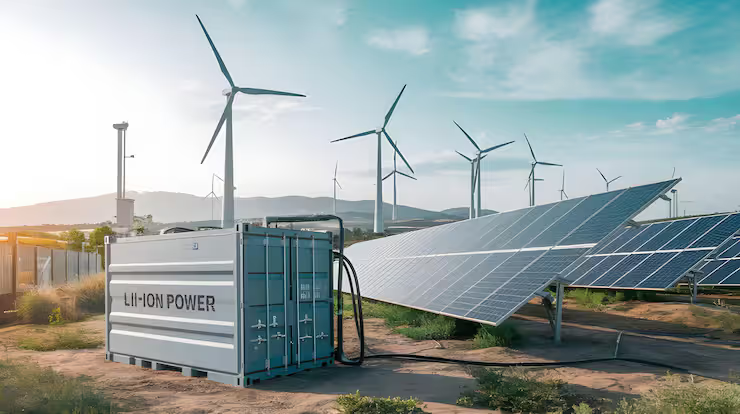
Renewable plant systems refer to energy generation setups that use naturally replenishing resources such as sunlight, wind, water, and organic materials. These systems are designed to produce electricity or thermal energy without depleting finite resources or causing long-term environmental harm.
Common examples include solar photovoltaic plants, wind farms, biomass power units, and hydroelectric systems. These plants integrate components like energy storage systems, smart grids, and monitoring technologies to ensure efficient and stable output.
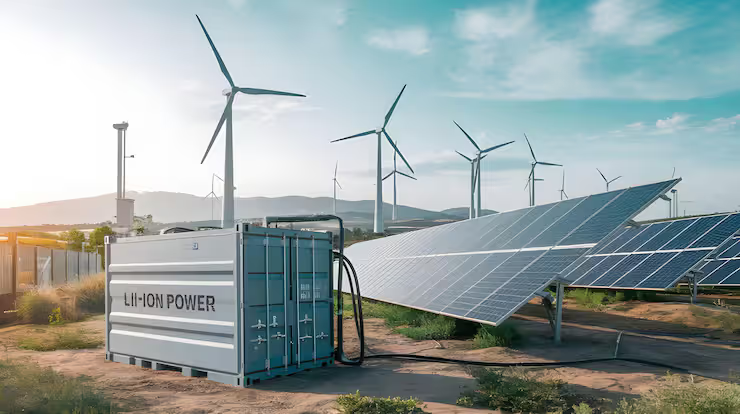
The need for renewable plant systems arises from increasing global energy demand, environmental concerns, and the limitations of fossil fuels. Traditional energy sources contribute significantly to carbon emissions, making sustainable alternatives essential.
Renewable energy systems also rely on advanced technologies such as grid integration software, predictive analytics, and energy management systems. These innovations help optimize performance, improve reliability, and support long-term sustainability goals.
Importance – Why Renewable Plant Systems Matter Today
Renewable plant systems play a critical role in addressing modern energy challenges. They are central to reducing greenhouse gas emissions and supporting global climate commitments.
Key reasons why renewable plant systems are important:
-
Environmental sustainability: They reduce carbon footprints and air pollution
-
Energy security: Diversifies energy sources and reduces dependency on imports
-
Economic stability: Supports long-term energy price stability
-
Technological advancement: Encourages innovation in energy storage and grid systems
-
Rural development: Enables decentralized energy generation in remote areas
These systems benefit industries, governments, and households alike. Industrial sectors use renewable energy for sustainable operations, while households adopt rooftop solar systems for energy independence.
Renewable plant systems also solve critical problems such as energy shortages, grid instability, and rising fuel demand. By integrating smart grid technologies and battery storage systems, energy can be distributed more efficiently and reliably.
Recent Updates – Trends and Developments in the Past Year
The renewable energy sector has experienced rapid growth and transformation in the past year, driven by technological advancements and policy support.
Notable trends and updates include:
-
2025–2026: Expansion of utility-scale solar farms with higher efficiency photovoltaic cells
-
Battery storage innovation: Improved lithium-ion and solid-state batteries enhancing grid reliability
-
Hybrid renewable plants: Integration of solar, wind, and storage systems in single facilities
-
AI-based energy management: Use of predictive analytics for load forecasting and maintenance
-
Green hydrogen projects: Emerging as a complementary technology for energy storage and transport
Below is a simple comparison of major renewable plant systems:
| Energy Source | Efficiency Range | Key Advantage | Limitation |
|---|---|---|---|
| Solar | 15%–25% | Abundant and scalable | Weather dependent |
| Wind | 30%–45% | High output in windy areas | Site-specific |
| Biomass | 20%–35% | Uses organic waste | Requires feedstock supply |
| Hydropower | 70%–90% | Highly efficient | Environmental impact |
These developments show a shift toward integrated energy ecosystems rather than standalone power plants.
Laws or Policies – Regulatory Framework and Government Support
Renewable plant systems are strongly influenced by national and international policies. Governments implement regulations to promote clean energy adoption and ensure compliance with environmental standards.
In India, several initiatives support renewable energy growth:
-
National Solar Mission: Focuses on expanding solar energy capacity
-
Renewable Purchase Obligations (RPO): Requires utilities to source a portion of energy from renewables
-
Production Linked Incentive (PLI) Scheme: Encourages domestic manufacturing of solar components
-
Green Energy Open Access Rules (2022): Simplifies renewable energy access for consumers
-
State-level policies: Provide incentives for solar rooftop and wind energy projects
Regulatory frameworks also include grid integration standards, environmental clearance norms, and land use policies. These rules ensure that renewable plant systems operate safely and efficiently while minimizing ecological impact.
Globally, agreements such as climate accords influence national policies, pushing countries toward higher renewable energy adoption targets.
Tools and Resources – Useful Platforms and Technologies
Various tools and resources help in planning, analyzing, and managing renewable plant systems. These tools are widely used by engineers, researchers, and energy planners.
Helpful tools and platforms include:
-
Solar calculators: Estimate energy generation based on location and panel efficiency
-
Wind resource assessment tools: Analyze wind speed and site suitability
-
Energy management software: Monitor and optimize plant performance
-
Grid simulation tools: Study integration with existing power systems
-
GIS mapping tools: Identify suitable locations for renewable projects
Popular categories of tools:
| Tool Type | Purpose | Example Use Case |
|---|---|---|
| Simulation Software | System design and analysis | Solar plant layout planning |
| Monitoring Systems | Real-time performance tracking | Detect efficiency drops |
| Data Analytics Platforms | Predictive maintenance | Reduce downtime |
| Energy Storage Calculators | Battery sizing | Optimize storage capacity |
These resources improve decision-making and ensure efficient system operation over time.
FAQs – Common Questions About Renewable Plant Systems
What are renewable plant systems?
Renewable plant systems are energy generation setups that use natural resources like sunlight, wind, water, and biomass to produce power sustainably.
How do renewable energy plants improve efficiency?
They use advanced technologies such as smart grids, energy storage systems, and predictive analytics to optimize energy production and distribution.
Are renewable plant systems reliable?
Yes, especially when combined with energy storage and hybrid systems, which ensure consistent power supply even when natural resources fluctuate.
What is the role of energy storage in renewable plants?
Energy storage systems store excess energy generated during peak production and release it when demand is high or production is low.
Which renewable energy source is most efficient?
Hydropower is generally the most efficient, but the best option depends on location, resource availability, and infrastructure.
Conclusion
Renewable plant systems represent a transformative approach to energy generation, combining sustainability, innovation, and efficiency. They address critical global challenges such as climate change, energy security, and resource depletion.
With continuous advancements in technology, supportive policies, and growing awareness, renewable energy systems are becoming more integrated and accessible. From solar farms to hybrid energy plants, these systems are shaping the future of energy infrastructure.
Understanding the basics, tools, and regulatory frameworks allows individuals and organizations to make informed decisions and contribute to a more sustainable energy ecosystem.