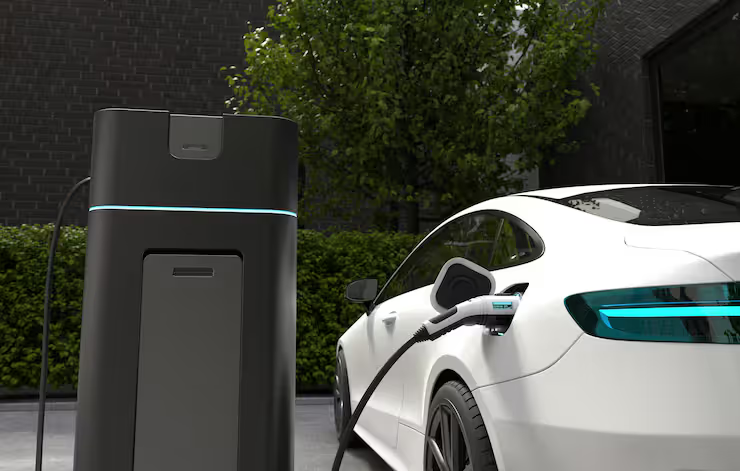
Electric charging technology refers to the systems and infrastructure used to recharge electric vehicles (EVs), including home chargers, public charging stations, and advanced fast-charging networks. As global transportation shifts toward electrification, understanding how these charging technologies differ has become increasingly important for individuals, businesses, and policymakers.
This comparison matters today due to the rapid growth of EV adoption worldwide. Governments are setting ambitious targets to phase out internal combustion engines, while automakers are expanding EV portfolios. However, charging infrastructure remains a key factor influencing user experience, range confidence, and adoption rates.
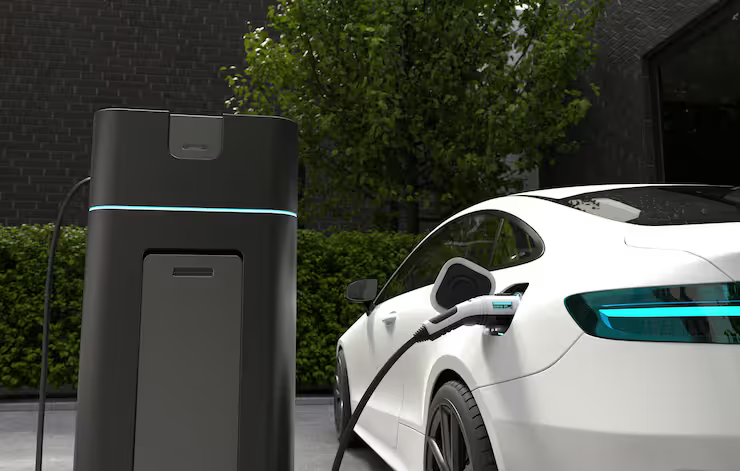
Recent trends show a strong push toward faster charging speeds, improved battery compatibility, and expansion of public charging networks. Technologies such as DC fast charging, ultra-fast chargers, and wireless charging are evolving quickly. At the same time, grid integration, renewable energy usage, and smart charging systems are becoming central to sustainable energy ecosystems.
The impact of these developments is significant. Efficient charging solutions reduce waiting times, improve accessibility, and support large-scale EV adoption. This makes understanding the differences between charging types essential for informed decision-making.
Who It Affects and What Problems It Solves
Electric charging technology affects a wide range of stakeholders. Individual EV owners rely on accessible and efficient charging solutions for daily commuting and long-distance travel. Businesses, including fleet operators and logistics companies, depend on charging infrastructure to maintain operational efficiency. Urban planners and governments must integrate charging networks into cities to support sustainable transportation goals.
Additionally, energy providers and utility companies are directly impacted as EV charging increases electricity demand. This requires upgrades in grid infrastructure, load management systems, and renewable energy integration.
One of the primary problems charging technology solves is “range anxiety,” which refers to the fear of running out of battery without access to a charging station. Faster and more widespread charging networks reduce this concern significantly.
Another key issue is charging time. Traditional charging methods can take several hours, which is impractical for many users. Advanced fast-charging technologies address this by reducing charging times to under an hour in many cases.
Charging technology also helps solve environmental challenges. By enabling the transition to electric mobility, it reduces reliance on fossil fuels and lowers greenhouse gas emissions when combined with clean energy sources.
Recent Updates and Trends
Over the past year, electric charging technology has seen several notable advancements and developments:
- Expansion of fast-charging networks: Many regions have significantly increased the number of DC fast chargers, particularly along highways and urban corridors.
- Ultra-fast charging innovation: Charging speeds exceeding 300 kW are being deployed, enabling EVs to gain substantial range in 15–20 minutes under optimal conditions.
- Standardization efforts: There has been progress toward unified charging standards, improving interoperability across vehicles and charging stations.
- Battery and charging integration: New EV models are designed to support faster charging while maintaining battery health, thanks to improved thermal management systems.
- Smart charging systems: Integration with mobile apps and grid systems allows users to schedule charging during off-peak hours, reducing costs and grid strain.
- Wireless and bidirectional charging: Pilot programs are exploring wireless charging and vehicle-to-grid (V2G) systems, allowing EVs to supply energy back to the grid.
These updates indicate a shift toward convenience, efficiency, and sustainability in charging ecosystems.
Comparison of Electric Charging Technologies
| Feature | Level 1 Charging | Level 2 Charging | DC Fast Charging |
|---|---|---|---|
| Power Output | ~1–2 kW | ~3–22 kW | 50–350+ kW |
| Charging Speed | Very Slow | Moderate | Very Fast |
| Typical Use Case | Home (basic) | Home & public | Highways & public stations |
| Time for Full Charge | 8–24 hours | 4–8 hours | 20–60 minutes |
| Installation Cost | Minimal | Moderate | High |
| Infrastructure Complexity | Low | Medium | High |
| Accessibility | Widely available (home) | Increasing | Expanding rapidly |
| Impact on Battery | Low stress | Balanced | Higher stress (managed) |
Key Insights from Comparison
- Level 1 charging is suitable for overnight home use but is not practical for frequent or long-distance driving.
- Level 2 charging offers a balance between cost and efficiency, making it the most common choice for residential and workplace setups.
- DC fast charging is essential for long-distance travel and commercial use but requires significant infrastructure investment.
Laws and Policies Affecting Charging Technology
Electric charging technology is closely influenced by government regulations, incentives, and infrastructure programs.
In many countries, governments are actively supporting EV charging expansion through subsidies, tax benefits, and public-private partnerships. Policies often focus on:
- Infrastructure development: Funding for public charging stations in urban and rural areas
- Standardization: Mandating compatibility standards to ensure interoperability
- Renewable integration: Encouraging the use of clean energy for charging networks
- Building regulations: Requiring new buildings to include EV charging provisions
Practical Guidance
- Urban residents: Public fast-charging networks are more relevant due to limited home charging access.
- Homeowners: Installing Level 2 chargers is often supported by incentives and provides long-term convenience.
- Businesses: Fleet operators benefit from investing in dedicated charging infrastructure to reduce operational costs.
- Policy compliance: Users should ensure chargers meet local electrical and safety standards before installation.
Understanding local regulations helps users choose compliant and future-proof charging solutions.
Tools and Resources
Several tools and platforms can help users better understand and utilize electric charging technology:
- Charging station locator apps: Provide real-time information on nearby charging stations, availability, and pricing
- Route planning tools: Help optimize travel routes based on charging stops and battery range
- Charging cost calculators: Estimate electricity costs based on usage and local tariffs
- Smart charging apps: Enable scheduling, monitoring, and remote control of charging sessions
- Government portals: Offer information on incentives, rebates, and infrastructure programs
- EV manufacturer apps: Provide vehicle-specific charging data and recommendations
These resources improve efficiency, reduce uncertainty, and enhance the overall EV ownership experience.
Frequently Asked Questions (FAQ)
What is the difference between AC and DC charging?
AC charging (Level 1 and Level 2) uses alternating current and relies on the vehicle’s onboard charger, while DC fast charging delivers direct current directly to the battery, enabling much faster charging.
Is fast charging harmful to EV batteries?
Frequent use of fast charging can increase battery wear over time, but modern EVs include battery management systems that minimize long-term impact.
How long does it take to charge an electric vehicle?
Charging time depends on the charger type and battery size. It can range from several hours (Level 1) to under an hour (DC fast charging).
Can I install a charging station at home?
Yes, most homeowners can install Level 2 chargers, often with support from local incentives and rebates.
Are charging stations widely available?
Availability varies by region, but public charging networks are expanding rapidly, especially in urban areas and along highways.
Conclusion
Electric charging technology plays a central role in the transition to sustainable transportation. The comparison between Level 1, Level 2, and DC fast charging highlights the trade-offs between cost, speed, and accessibility.
Data from industry reports consistently shows that Level 2 charging remains the most practical solution for daily use, while DC fast charging is critical for long-distance travel and commercial applications. The rapid expansion of charging networks and advancements in charging speed are addressing key barriers such as range anxiety and long charging times.
From a practical standpoint, the best choice depends on individual needs. Home users benefit from Level 2 chargers for convenience and cost efficiency, while frequent travelers and businesses should rely on fast-charging infrastructure.
Overall, the direction of electric charging technology is clear: faster, smarter, and more integrated with energy systems. As infrastructure continues to grow and improve, charging will become less of a limitation and more of an enabler for widespread EV adoption.