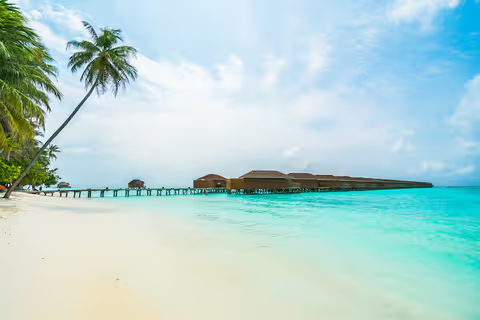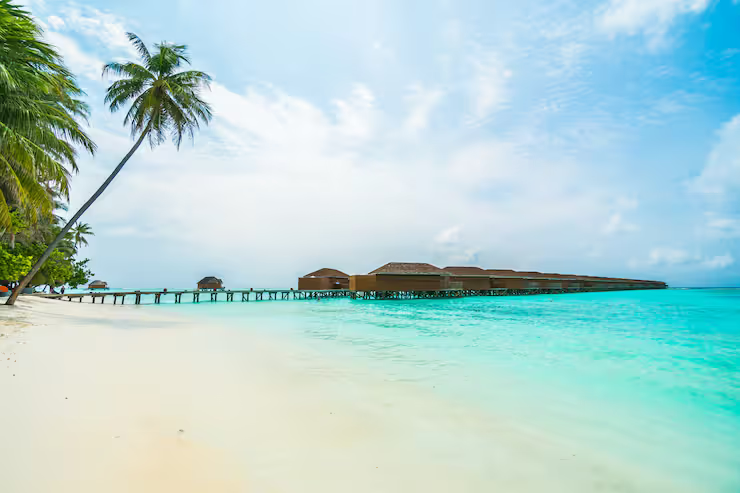
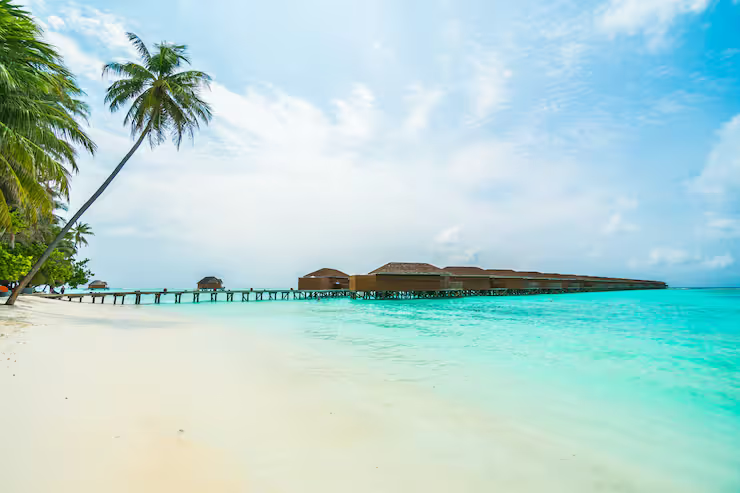
The beaches of the Maldives are globally recognized for their white coral sand, turquoise waters, and unique atoll geography. Located in the Indian Ocean, the Maldives consists of over 1,000 coral islands grouped into 26 atolls, each offering distinct beach environments. These beaches vary significantly in terms of accessibility, biodiversity, infrastructure, and visitor experience.
In recent years, comparing different Maldivian beaches has become increasingly relevant due to changing travel patterns, environmental concerns, and evolving tourism models. Travelers now evaluate beaches based not only on aesthetics but also on sustainability, crowd levels, marine life, and affordability. The rise of local island tourism, alongside traditional private resorts, has expanded options and introduced new decision-making factors.
Trends such as eco-tourism, reef conservation, and digital nomad travel have also influenced how beaches are used and managed. Additionally, climate-related challenges like coral bleaching and sea-level rise have brought attention to environmental resilience. Understanding these differences helps individuals make informed decisions based on purpose—whether relaxation, snorkeling, research, or cultural exploration.
Who It Affects and What Problems It Solves
The diversity of beaches in the Maldives affects multiple groups, including tourists, marine researchers, local communities, and policymakers. Travelers benefit from understanding which beaches align with their expectations some prioritize privacy and luxury, while others seek affordability or ecological richness.
Local communities are directly impacted by tourism distribution. Public beaches on inhabited islands support local economies through guesthouses and small businesses, while private resort islands operate under exclusive management systems. This dual structure creates different economic and social outcomes.
Marine scientists and conservationists are also stakeholders, as beach and reef conditions influence biodiversity research and conservation strategies. Government authorities use beach data to regulate tourism flow and protect fragile ecosystems.
Problems It Solves
- Decision Complexity: Helps travelers choose between resort islands and local islands
- Budget Planning: Differentiates high-end and cost-conscious beach experiences
- Environmental Awareness: Highlights sustainable vs. vulnerable beach areas
- Activity Matching: Identifies beaches suited for snorkeling, diving, or relaxation
- Crowd Management: Assists in selecting less congested locations
Recent Updates and Trends
Over the past year, several developments have influenced Maldivian beaches:
- Expansion of Local Island Tourism (2025): More inhabited islands have opened regulated public beaches, increasing accessibility for independent travelers.
- Coral Restoration Projects: Ongoing reef regeneration programs using artificial structures and coral farming have been expanded in multiple atolls.
- Sustainability Certifications: An increasing number of resorts have adopted eco-certifications, focusing on waste reduction and reef protection.
- Digital Nomad Visa Continuation: The Maldives continues to support long-stay visitors, influencing beach usage patterns beyond short-term tourism.
- Climate Monitoring Initiatives: Enhanced satellite and marine monitoring systems are being used to track erosion and reef health.
These updates indicate a shift toward balancing tourism growth with environmental preservation.
Comparative Overview of Maldives Beaches
| Feature | Resort Island Beaches | Local Island Beaches | Remote/Uninhabited Beaches |
|---|---|---|---|
| Accessibility | Limited (private access) | Open to public | Requires special travel |
| Cost Level | High | Moderate to low | Variable |
| Privacy | Very high | Moderate | High |
| Infrastructure | Luxury amenities | Basic facilities | Minimal |
| Marine Biodiversity | Well-preserved reefs | Mixed condition | Often pristine |
| Cultural Exposure | Limited | High | None |
| Regulations | Strict resort policies | Government-regulated | Environmental restrictions |
| Activities | Curated experiences | Self-guided activities | Exploration-focused |
| Sustainability Efforts | Increasingly structured | Emerging initiatives | Naturally preserved |
Laws or Policies Affecting Maldives Beaches
The Maldives operates under a dual tourism model governed by national regulations and environmental policies. Beaches are categorized based on island type resort islands, inhabited islands, and uninhabited islands each subject to different rules.
Key Regulatory Areas
- Tourism Zoning Laws: Resort islands are leased to private operators, restricting public access.
- Public Beach Regulations: On inhabited islands, designated “bikini beaches” are allocated for tourists to comply with local cultural norms.
- Environmental Protection Laws: Coral mining is banned, and marine protected areas (MPAs) restrict certain activities like fishing and anchoring.
- Waste Management Policies: Resorts are required to implement waste disposal systems; however, enforcement varies across local islands.
- Coastal Protection Guidelines: Construction near shorelines is regulated to prevent erosion and habitat damage.
Practical Guidance
- Choose resort beaches for controlled environments and consistent service standards.
- Opt for local island beaches if interested in cultural interaction and budget-conscious travel.
- Visit protected or remote beaches only with proper permissions and guided support to ensure compliance with environmental laws.
Tools and Resources
Several tools and platforms can assist in understanding and planning beach experiences in the Maldives:
Travel Planning Tools
- Google Maps – Satellite view for identifying island layouts and reef proximity
- Windy App – Real-time weather and ocean condition tracking
- Rome2Rio – Transport route planning between islands
Marine and Environmental Data
- Reef Check Reports – Global coral reef monitoring data
- NOAA Coral Reef Watch – Tracks bleaching alerts and sea temperature trends
- UNEP Data Portal – Environmental indicators and sustainability metrics
Booking and Research Platforms
- Booking.com / Agoda – مقارنة بين local guesthouses and resorts
- Tripadvisor – User-generated reviews on beach conditions and activities
- Maldives Meteorological Service – Official weather forecasts
Productivity and Documentation
- Notion / Google Docs – Trip planning templates
- Excel / Google Sheets – Budget and itinerary tracking
Frequently Asked Questions (FAQ)
What makes Maldives beaches unique compared to other tropical destinations?
Maldives beaches are formed from coral sand rather than quartz, giving them a finer texture and brighter white appearance. The atoll structure also creates shallow lagoons with calm waters.
Are all beaches in the Maldives accessible to tourists?
No. Resort island beaches are private, while local island beaches are public but may have designated tourist zones.
Which type of beach is best for snorkeling?
Resort islands and remote beaches typically offer better reef conditions due to controlled access and conservation efforts.
Is it possible to visit multiple beaches during one trip?
Yes, but inter-island travel requires planning via seaplanes, speedboats, or domestic flights, which can affect time and cost.
How does climate change impact Maldives beaches?
Rising sea levels and coral bleaching affect shoreline stability and marine biodiversity, making conservation efforts critical.
Conclusion
The beaches of the Maldives are not uniform; they vary significantly based on location, governance, and environmental conditions. Resort beaches offer high privacy and structured experiences, while local island beaches provide cultural exposure and affordability. Remote beaches, though less accessible, often present the most untouched natural environments.
Recent data and trends indicate a growing emphasis on sustainability, with both government and private sectors investing in reef protection and eco-friendly tourism practices. However, environmental challenges remain, requiring informed decision-making by visitors and stakeholders.
For most travelers, the optimal choice depends on priorities:
- Luxury and privacy → Resort islands
- Budget and local interaction → Inhabited islands
- Nature and exploration → Remote beaches
A balanced approach combining different beach types can provide a more comprehensive understanding of the Maldives while supporting sustainable tourism.