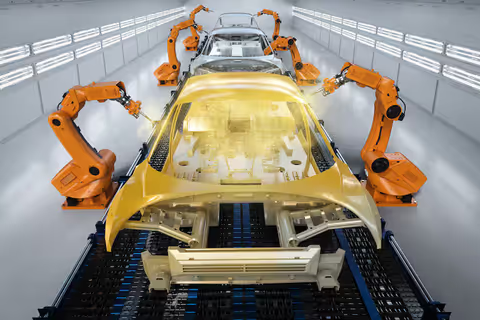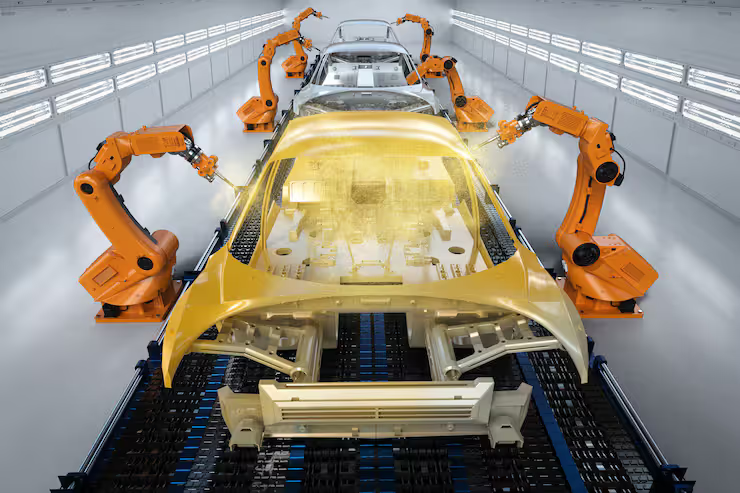
Automotive painting robots are specialized industrial machines designed to apply coatings such as primers, base coats, and clear coats onto vehicle bodies with high precision and consistency. These robots typically operate within controlled paint booths, using programmed paths, sensors, and advanced atomization systems to achieve uniform coverage while minimizing waste and defects. As part of broader industrial automation trends, they integrate with conveyor systems, vision technologies, and digital control platforms.
This comparison matters increasingly in recent years due to the automotive sector’s shift toward efficiency, sustainability, and quality assurance. With stricter environmental standards, growing production volumes, and rising labor costs, manufacturers are evaluating robotic painting systems not just for speed, but for long-term performance and compliance. Trends such as electric vehicle (EV) production, lightweight materials, and customization demands are also reshaping painting requirements. Additionally, Industry 4.0 technologies like data analytics and predictive maintenance are influencing how these robots are deployed and optimized. The impact is significant: improved finish quality, reduced material waste, lower emissions, and enhanced workplace safety.
Who It Affects and What Problems It Solves
Automotive painting robots primarily affect vehicle manufacturers, including large OEMs (original equipment manufacturers), contract manufacturers, and component suppliers. They are also relevant to system integrators, robotics engineers, paint suppliers, and maintenance teams responsible for ensuring consistent production output. In smaller capacities, they influence aftermarket and custom vehicle shops adopting semi-automated systems.
For manufacturers, the transition to robotic painting impacts production planning, capital investment, workforce training, and compliance with environmental regulations. Workers benefit through reduced exposure to hazardous chemicals and repetitive tasks, while engineers gain opportunities to optimize processes using software-driven controls.
Problems It Solves
- Inconsistent Coating Quality: Manual painting can lead to uneven layers, defects, and rework. Robots ensure repeatable, precise application.
- Material Waste: Advanced spray technologies optimize paint usage, reducing overspray and costs.
- Worker Safety Risks: Automated systems limit human exposure to volatile organic compounds (VOCs) and hazardous fumes.
- Production Bottlenecks: Robots operate continuously with minimal downtime, improving throughput.
- Environmental Compliance: Controlled spraying and filtration systems help meet strict emission standards.
Recent Updates and Trends
Over the past year, several developments have shaped the automotive painting robotics landscape:
- AI-Driven Path Optimization: Manufacturers are increasingly using machine learning algorithms to refine spray patterns in real time, improving efficiency and reducing waste.
- Digital Twin Integration: Simulation tools now allow engineers to model paint processes virtually, testing different configurations before implementation.
- Eco-Friendly Coatings: Water-based and low-VOC paints are becoming standard, requiring robots to adapt to different viscosities and drying behaviors.
- Collaborative Robots (Cobots): Smaller-scale operations are adopting cobots for flexible painting tasks, especially in customization workflows.
- Energy Efficiency Improvements: New robotic systems are designed to reduce compressed air and energy consumption, aligning with sustainability goals.
- EV Manufacturing Influence: Electric vehicle designs often require new coating techniques due to different materials and thermal properties.
These updates indicate a shift toward smarter, more adaptive painting systems rather than purely mechanical automation.
Comparative Overview of Automotive Painting Robots
| Feature / Criteria | Traditional Industrial Robots | Advanced AI-Integrated Robots | Collaborative Painting Robots |
|---|---|---|---|
| Precision Level | High | Very High (adaptive) | Moderate |
| Flexibility | Low–Moderate | High | Very High |
| Setup Complexity | High | Very High | Low–Moderate |
| Cost (Initial Investment) | High | Very High | Moderate |
| Maintenance Needs | Moderate | High (software + hardware) | Low–Moderate |
| Energy Efficiency | Moderate | High | High |
| Suitable for Mass Production | Yes | Yes | Limited |
| Customization Capability | Limited | Advanced | Strong |
| Integration with IoT | Basic | Advanced | Moderate |
| Workforce Requirement | Skilled technicians | Highly skilled engineers | Minimal training required |
This comparison highlights how newer robotic systems emphasize adaptability and intelligence, while traditional robots remain strong in stable, high-volume environments.
Laws and Policies Affecting Automotive Painting Robots
Automotive painting operations are subject to environmental, safety, and industrial regulations. These rules vary by country but generally focus on emissions, worker safety, and waste management.
Key Regulatory Areas
- Emission Standards: Governments regulate VOC emissions from paint processes. Facilities must use compliant coatings and filtration systems.
- Workplace Safety: Occupational safety standards require proper ventilation, protective systems, and reduced human exposure to hazardous materials.
- Waste Disposal: Paint sludge and chemical residues must be handled according to hazardous waste regulations.
- Energy Efficiency Guidelines: Some regions incentivize energy-efficient manufacturing systems, including robotic automation.
Practical Guidance
- Large-Scale Manufacturing: Advanced robotic systems with integrated emission control are suitable for meeting strict compliance requirements.
- Small or Medium Facilities: Collaborative robots may be more practical due to lower complexity and easier compliance management.
- Regions with Strict Environmental Laws: AI-driven systems that optimize paint usage and reduce emissions provide long-term regulatory advantages.
Understanding local regulatory frameworks is essential before investing in any painting robot system, as compliance costs can significantly influence total ownership costs.
Tools and Resources
Several tools and resources support the implementation and optimization of automotive painting robots:
Software and Simulation Tools
- Digital Twin Platforms: Used to simulate painting processes and optimize robot paths before deployment.
- CAD/CAM Integration Tools: Enable precise programming of robotic movements based on vehicle design.
- Process Monitoring Software: Tracks performance metrics such as paint thickness, cycle time, and defect rates.
Hardware and Equipment
- Electrostatic Spray Systems: Improve transfer efficiency and reduce overspray.
- Vision Systems: Assist in detecting surface variations and adjusting spray patterns.
- Air Filtration Units: Ensure compliance with emission standards.
Online Resources and Knowledge Bases
- Industry whitepapers on automation trends
- Government regulatory websites for compliance guidelines
- Engineering forums discussing robotics integration challenges
Templates and Checklists
- Maintenance schedules for robotic systems
- Compliance checklists for environmental and safety standards
- ROI calculation templates for automation investments
These resources help organizations make informed decisions and maintain efficient operations.
Frequently Asked Questions (FAQ)
What are automotive painting robots used for?
Automotive painting robots are used to apply coatings to vehicle surfaces with high precision, ensuring consistent quality and reducing waste compared to manual methods.
How do robotic painting systems improve efficiency?
They operate continuously, optimize paint usage, and reduce rework by maintaining uniform coating thickness and minimizing defects.
Are painting robots suitable for small manufacturers?
Yes, especially collaborative robots, which are more flexible and require lower initial investment and simpler setup compared to large industrial systems.
What are the environmental benefits of robotic painting?
They reduce overspray, lower VOC emissions, and improve material efficiency, helping manufacturers meet environmental regulations.
What factors should be considered before adopting painting robots?
Key factors include production volume, budget, regulatory requirements, workforce skills, and integration with existing manufacturing systems.
Conclusion
Automotive painting robots have evolved from rigid, high-volume industrial machines into intelligent, adaptable systems that align with modern manufacturing demands. Data from industry adoption trends shows that automation in painting processes consistently improves coating consistency, reduces material waste, and enhances compliance with environmental standards. While traditional robots remain effective for stable, large-scale production, AI-integrated systems and collaborative robots offer greater flexibility and efficiency for evolving production needs.
The choice depends on operational scale and strategic priorities. High-volume manufacturers benefit from advanced, fully integrated systems, while smaller or specialized operations may find collaborative robots more practical. Overall, the data-driven direction of the industry suggests that investing in adaptable, energy-efficient robotic systems provides long-term advantages in both performance and compliance.